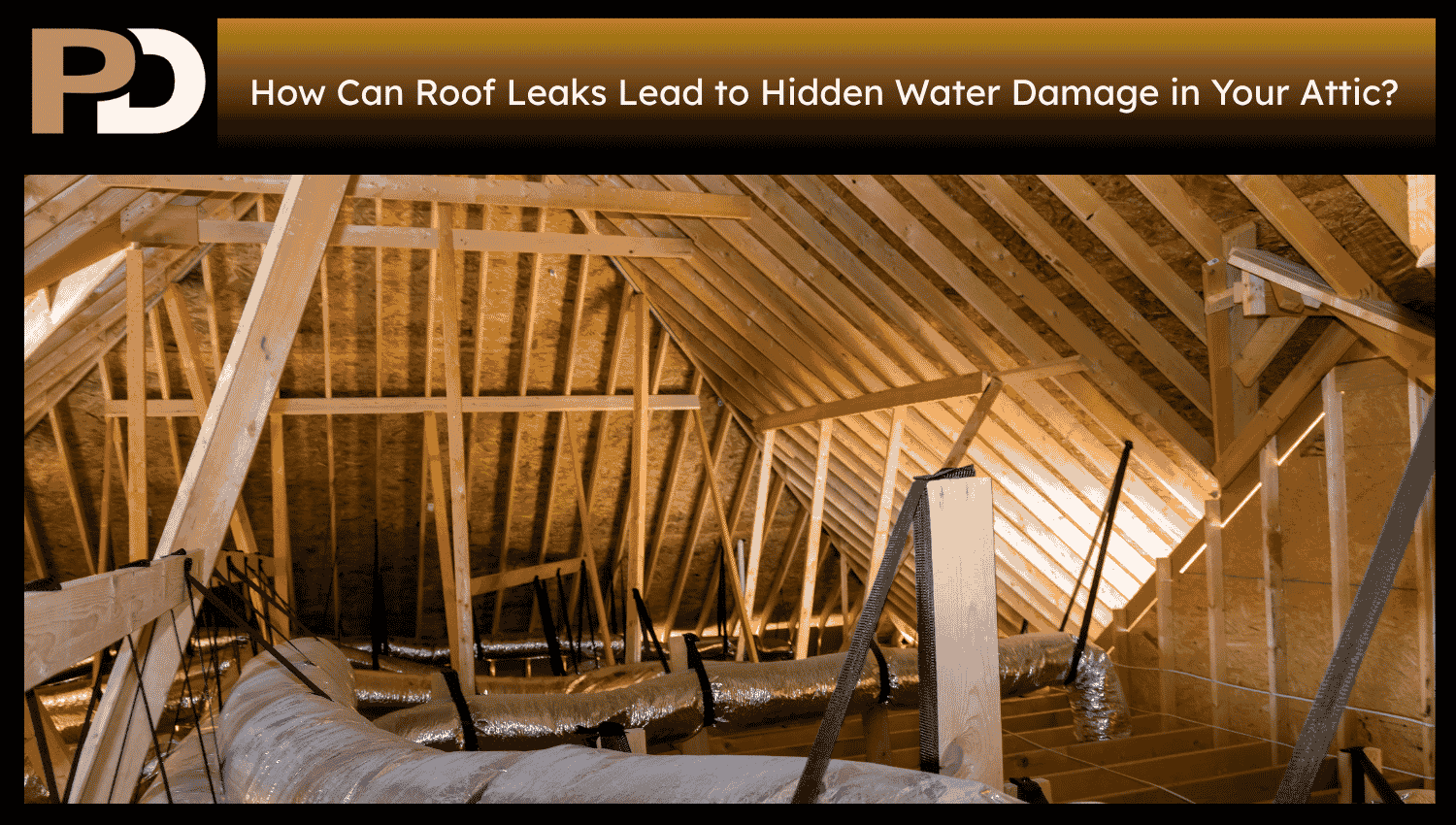
The attic is the first place inside the roof where hidden water damage from roof leaks can occur. Water infiltrates the roofing system through tiny openings and does not show up in the home until it has made its way inside. Water seeps into insulation, roof decking, wood framing, and ceiling cavities without noticeable symptoms. Attic leaks go unnoticed for weeks or months, as attics aren’t used every day of the year. Ceiling stains and dripping water indicate that moisture has affected structural materials by the time water is seen inside. Getting roofing repairs as soon as possible and regular attic maintenance prevent potential water damage from getting worse.
What Common Roof Problems Can Lead to Attic Water Damage?
Here are the 6 Common Roof Problems Can Lead to Attic Water Damage:
- Damaged or Missing Shingles: Shingles shield the roof from precipitation and exposure to the elements. Cracked, loose, or missing shingles can allow water to flow through gaps under the roof and into the attic. This problem is frequently caused by wind damage, hail, and aging materials.
- Worn Roof Flashing: Roof flashing seals the bends of the roof around chimneys, skylights, roof valleys, and vents. Flashing cracks, loosens, or becomes corroded over time. Damaged flashing allows rainwater to get into the attic.
- Cracked Roof Vents: Roof vents are used to let air in, but keep water out. During storms, rain enters your roof through cracks in the vent covers, torn vent boots, or worn vent seals. Water frequently flows through rafters before it is seen.
- Ice Dams: Ice dams are the result of melting snow refreezing at the edge of roofs. Backups behind the ice are under shingles and leak into the attic. This is a problem in cold climates.
- Clogged Gutters: Gutters that are obstructed with debris and leaves do not allow rainwater to flow freely. Water puddles under roof edges and leaks into the attic.
- Aging Roofing Materials: As with everything else, roofing materials wear out over time. Shingles, flashing, and seals lose strength due to weather exposure, temperature changes,s and sunlight. Leaky roofs are more prone to cause water leakage in the attic areas, especially in older roofs.
What Are the Early Warning Signs of Attic Water Damage?
Here Are the 6 Early Warning Signs of Attic Water Damage:
- Compressed Insulation: All wet insulation comes down and gets compressed. This decreases its ability to provide effective thermal insulation. Water is leaking from a roof deck, and the decking is stained with water.
- Water Stains on Roof Decking: The roof decking is stained or discolored when it is exposed to water multiple times. These stains occur before any damage to the interior surfaces is noticeable.
- Musty Odors: A musky odor that is always present means there is some type of moisture in the attic. Rainfall does not always stop, as wet materials retain moisture.
- Dripping Water During Rain: Dripping water inside the attic during a rainstorm means that there’s a roof leak that needs to be taken care of ASAP.
- Visible Daylight: Small openings for daylight also allow rainwater to enter the attic. These openings should be filled in as soon as possible.
- Discolored Ceiling Areas: Attic moisture seeps down, causing stains on the ceiling in shades of yellow, brown, or dark. When the stains are getting larger, there is likely a continuous leak.
How Can Hidden Attic Moisture Spread Throughout a Home?
Moisture in the attic spaces is not necessarily localized. Insulation and roof decking are the initial areas where water travels before infiltrating wooden rafters and trusses. Moisture is further transported downward into ceiling cavities and interior wall spaces. The HVAC ductwork and insulation run through the attic, where water also impacts them. Over time, water leaks to upper-floor rooms, walls, and ceilings. Water flows along structural lines so that damage occurs far from the source of the roof leak.
How Can Poor Attic Ventilation Increase Water Damage Risks?
Without proper attic ventilation, moisture does not dry out efficiently. Less air circulation results in higher humidity and slower evaporation. Warm, moist air condenses on cooler roof surfaces, causing additional moisture on the roof without rain. Wet insulation and wood framing stay wet longer, increasing the risk of deterioration. The attic is not able to dry out as thoroughly without proper ventilation, and roof leaks and moisture damage continue to spread. Good ventilation clears out humid air and helps it dry out faster.

What Long-Term Problems Can Develop From Attic Water Damage?
Here are the 5 Long-Term Problems That Can Develop From Attic Water Damage:
- Roof Structure Deterioration: Excessive moisture causes deterioration in roof decks, rafters, and trusses. Water damage can destroy the integrity of these structural components.
- Reduced Insulation Performance: Wet insulation significantly reduces its insulation properties, and loss of insulation results in higher heating and cooling expenses year-round.
- Ceiling Damage: Water reaches finished ceilings and stains, peels paint, sags drywall, or damages plaster. Leaky ceilings are a common problem that needs to be fixed.
- Persistent Damp Conditions: Water is stored for a long time in attic materials. Building materials remain damp for a long time after the source of the moisture has been eliminated.
- Increased Repair Costs: Major problems from small roof leaks are more costly if they are not addressed. Often, water damage is hidden and manifests in several areas of the building.
How Can Attic Water Damage Affect Property Value?
Attic water damage can even decrease a home’s value, as most individuals who see water damage assume the house was not well-maintained. During the home inspection, water stains, damaged insulation, or weak roof structures are of concern. Any hidden moisture indicates potential repair costs, discouraging the buyer from purchasing the house. A history of roof maintenance and prompt repairs helps attract prospective home buyers. Early treatment of water damage in the attic area helps preserve the home and its market value.