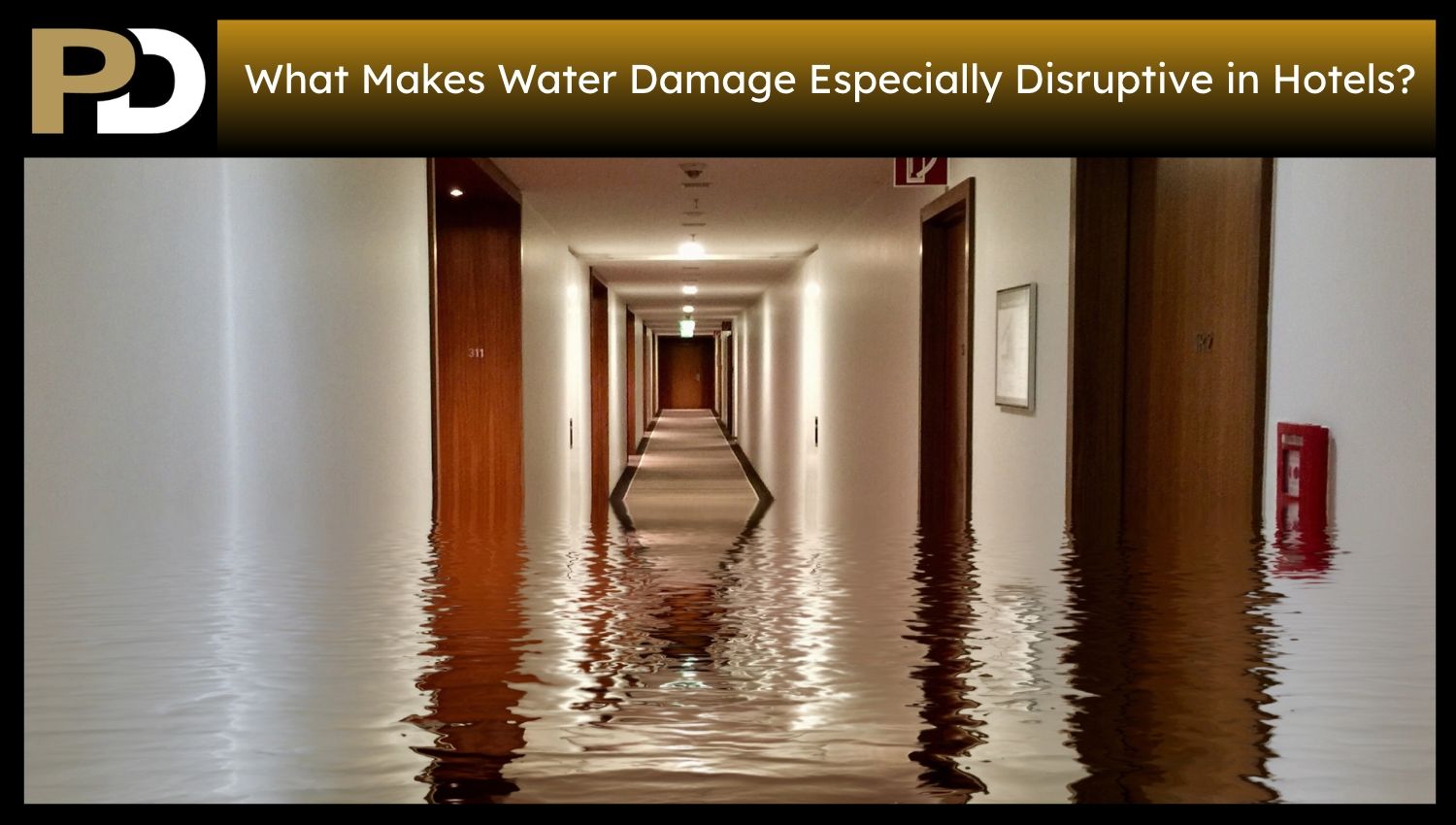
Water damage in hotels is more disruptive than in other settings. Guest room availability, continuous operations, cleaning, laundry services, shared facilities, and booking obligations all depend on different parts of the accommodation remaining functional. Even a localized incident can disrupt several connected operations, reduce room availability, and make everyday hotel services more difficult. These interrelated tasks make water damage especially destructive at hotels.
Which Hotel Areas and Operations Create Water-Damage Exposure?
Hotels use water in many areas and service functions, and water-dependent activities are widely spread across the property. These include guest rooms, public toilets, commercial laundry, kitchens, restrooms, mechanical facilities, landscape works, and heating and refrigeration systems. Water-related services also depend on assisted areas for pools and spas. EPA WaterSense identifies toilets, laundry, commercial kitchens, landscapes, and heating and cooling as among the main uses of water at hotels. This widespread dependence means a water event affect different parts of hotel operations rather than one isolated area.
Why Can a Localized Water Loss Remove Multiple Guest Rooms From Available Inventory?
Hotel rooms follow repeated layouts positioned close to one another, with bathrooms, sanitation, mechanical services, hallways, and service rooms. As a result, a localized water event affect more than one room or limit access to rooms adjacent to the area needed for evaluation and work. Some rooms have direct water damage, while others temporarily unavailable because of impacts to a shared service or adjacent workspace. This reduces rooms available for guests even where a large part of the hotel remains physically unaffected.

Why Does 24/7 Guest Occupancy Make Hotel Water Damage More Disruptive?
Hotels operate 24/7, and guests sleep, swim, use elevators and corridors, and are checked in and out day and night. Water damage therefore affects occupied property rather than an empty workplace outside normal working hours. Hotel management need to change guest access, restrict access to affected areas, coordinate with guests’ ongoing activities, and clearly communicate the facilities available to them. Guests’ services should continue where circumstances permit, these competing requirements make continuity difficult. Ready.gov’s business continuity principles also underline the importance of communication and maintaining essential operations in the event of disruption.
How Can Water Damage Disrupt Housekeeping, Laundry, and Room Turnover?
Preparing a hotel room depends on access to the house, clean linens, fresh towels, and a reliable laundry room. Water damage to linen storage, household cupboards, laundry, commercial washing machines, service rooms, or staff entrance routes delay these activities. Rooms not directly damaged take longer to prepare for guest entry. EPA WaterSense identifies laundry as a major source of water use in hotels, reflecting its importance to daily operations. Malfunctions in linen movement and household supply therefore reduce the number of rooms ready for use.
How Can Damage to Corridors, Elevators, Lobbies, or Amenities Affect Otherwise Usable Rooms?
The guest room remains physically dry but temporarily inaccessible, or less practically useful, if shared access routes are disrupted or guest facilities must be accommodated. During hotel access and normal operation, a closed corridor, affected elevator lobby, limited circulation, or damaged front desk space may interfere. Temporary closing of public toilets, swimming pools, spas, gym rooms, or conference rooms also limit service to guests. This means hotel room availability depends on more than the room’s physical condition, since shared access and facilities support the broader guest experience.
How Can Reduced Room Availability Disrupt Check-Ins, Room Assignments, and Reservations?
Water damage that removes rooms from existing inventory affects incoming reservations, same-day arrivals, and room assignments for existing guests. The remaining rooms do not match the original type or location requested. Accessibility requirements, connection-room needs, floor preferences, or existing occupancy reduce other appropriate alternatives. Guests also put pressure on staff because they must move from the affected rooms. As a result, hotel check-in is delayed, and room allocation issues arise, even when many rooms remain usable. Disruption extends beyond the damaged area, as booking obligations depend on having adequate rooms available at the right time.