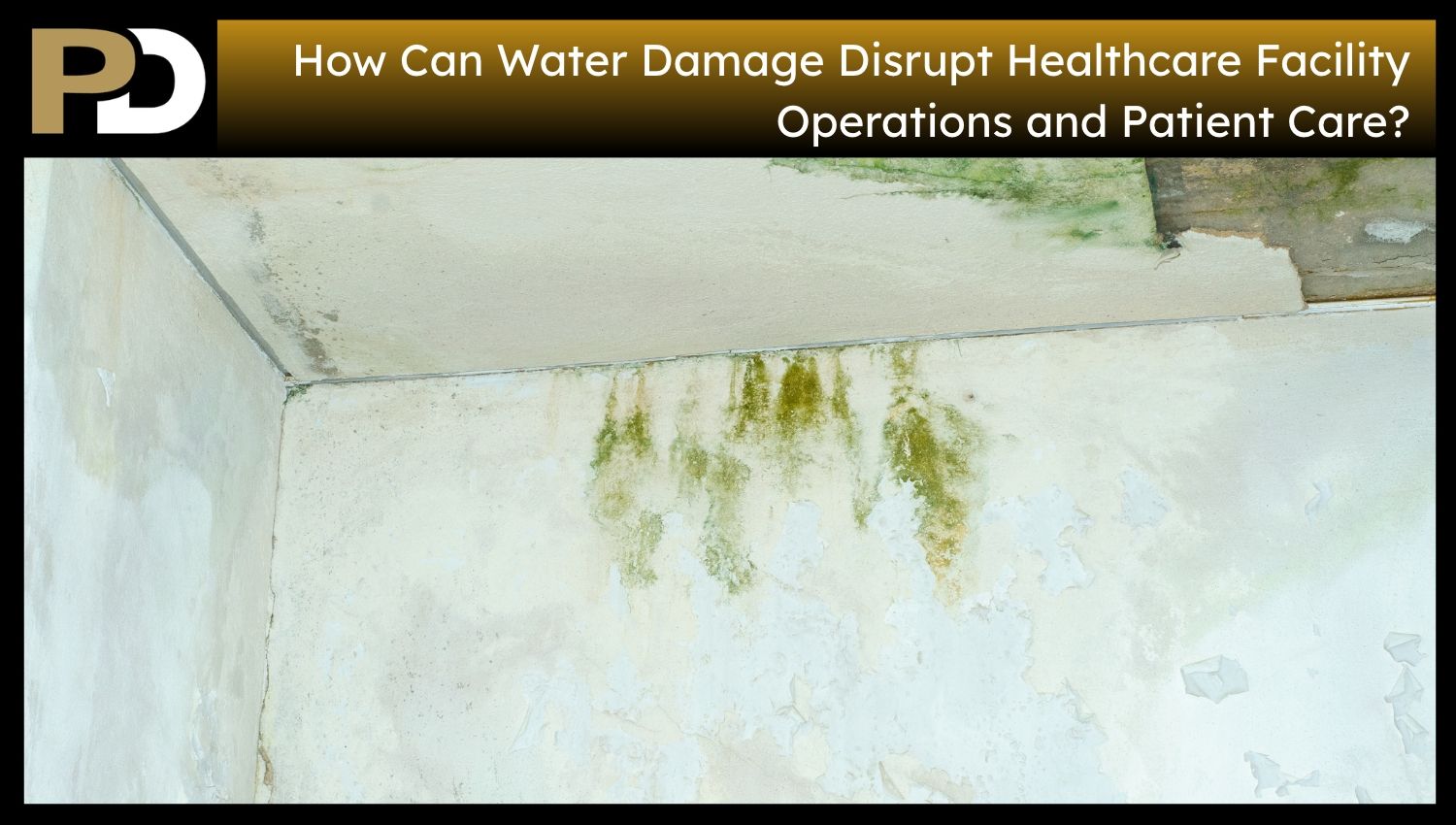
Water damage in healthcare facilities affects more than areas directly impacted by water. Patient-care capacity, infection-prevention requirements, water-dependent services, specialized departments, clinical support systems, and patient movement all contribute to day-to-day operations. Even when only part of a facility is physically damaged, clinically related functions are absent or harder to maintain. This makes healthcare facilities especially sensitive to disturbances that affect both patient-care spaces and systems they support.
Why Can a Localized Water Loss Take Multiple Patient-Care Areas Out of Service?
Water damage to inpatient care rooms, examination wards, medical wards, workshops, nurse workstations, and site support areas reduces service beyond the immediate wet area. Normal clinical operations must be paused to assess the area’s condition and the support systems within the affected zone. Rooms in the area also depend on shared access, utilities, assisted areas, or clinical workflow. The Restart Office CDC healthcare facility has identified the need to inspect affected patient-care areas, equipment, utilities, and supporting infrastructure before resuming normal operations. A localized water issue reduces the number of locations available for patient care, even when most locations remain physically intact.
Why Do Infection-Control-Sensitive Areas Create Additional Operational Constraints After Water Damage?
Health care institutions have specific requirements for maintaining appropriate conditions for patient care, especially in areas where invasive procedures, sterile activity, or care for at-risk patients occur. Water damage can impair a space’s ability to meet its expected clinical functions. The CDC Environmental Infection Control Guide discusses health problems associated with floods, water supply issues, repairs, construction work, and reopening affected areas. Depending on the region, you need to screen infection prevention personnel, equipment crews, technical teams, and other appropriate specialists before resuming normal clinical operations. The task goes beyond removing visible water because it also complies with Safe Clinical Use Facility standards.
Why Can Loss of Potable Water or Wastewater Service Disrupt Healthcare Operations So Quickly?
Health institutions rely on reliable potable water and functional sewage systems for many routine clinical and support activities. These services provide hand hygiene, drinking water, patient care, cleaning and medical treatment, dedicated medical equipment, instrument sterilization, and food services. Operations are impaired if the service is interrupted in whole or in part, even with little apparent structural damage. The CDC’s Emergency Water Supply Planning Guide explains that shutting down water significantly disrupts healthcare operations, since safety, quality of care, and performance depend on reliable access to water. This dependence makes water and wastewater service availability a key component of maintaining normal healthcare operations.
Why Are Operating Rooms, Labs, Imaging, Sterile Processing, and Other Specialized Departments Hard to Replace Temporarily?
Healthcare services depend on specific layouts, fixed care, specialized equipment, controlled environments, and workflows. Business and technology offices, laboratories, imaging offices, sterile treatment areas, pharmacy facilities, and dialysis units all perform distinct functions. An unused Patient Room or ordinary office does not provide the infrastructure or equipment required to carry out the activity. CDC Health reopening guidance defines medical equipment, patient-care regions, utilities, and medical support infrastructure as important areas subject to a major water-damage assessment. A single institution can lose a specialized clinical or diagnostic service, even if other departments remain functioning, if one of these subdivisions becomes unavailable.

How Can Water Damage to Clinical Utilities and Support Infrastructure Affect Otherwise Dry Care Areas?
A patient-care room may remain physically dry but lose its normal functionality if a shared distribution or support system becomes unavailable. Health facilities rely on systems such as potable water, wastewater services, electrical power, backup generation, ventilation, medical gas, steam, and compressed air to support clinical activity. Water damage affecting this infrastructure disrupts the functioning of rooms or departments outside the affected area. CDC reopening guidance: Hospital recognizes the importance of assessing utility, equipment, and medical support infrastructure before resuming regular operations. The main operational problem is dependence on clinical space for medical delivery systems throughout the facility.
How Can Water-Damaged Corridors, Elevators, or Shared Routes Disrupt Patient Care Elsewhere in the Facility?
Medical surgery depends on movement between Emergency Services, diagnostics, offices, and auxiliary units. Patients, doctors, supplies, equipment, drugs, samples, and linens all depend on common routes to reach the areas they need. Water damage that reduces the number of corridors approaching halls, entrance corridors, or connecting corridors makes it harder to reach or coordinate clinical areas with other departments. Movement between divisions is part of the healthcare process; these disruptions affect more than public access to the building. Losing a common route also adversely affects clinical processes when the spaces at either end remain physically useful.