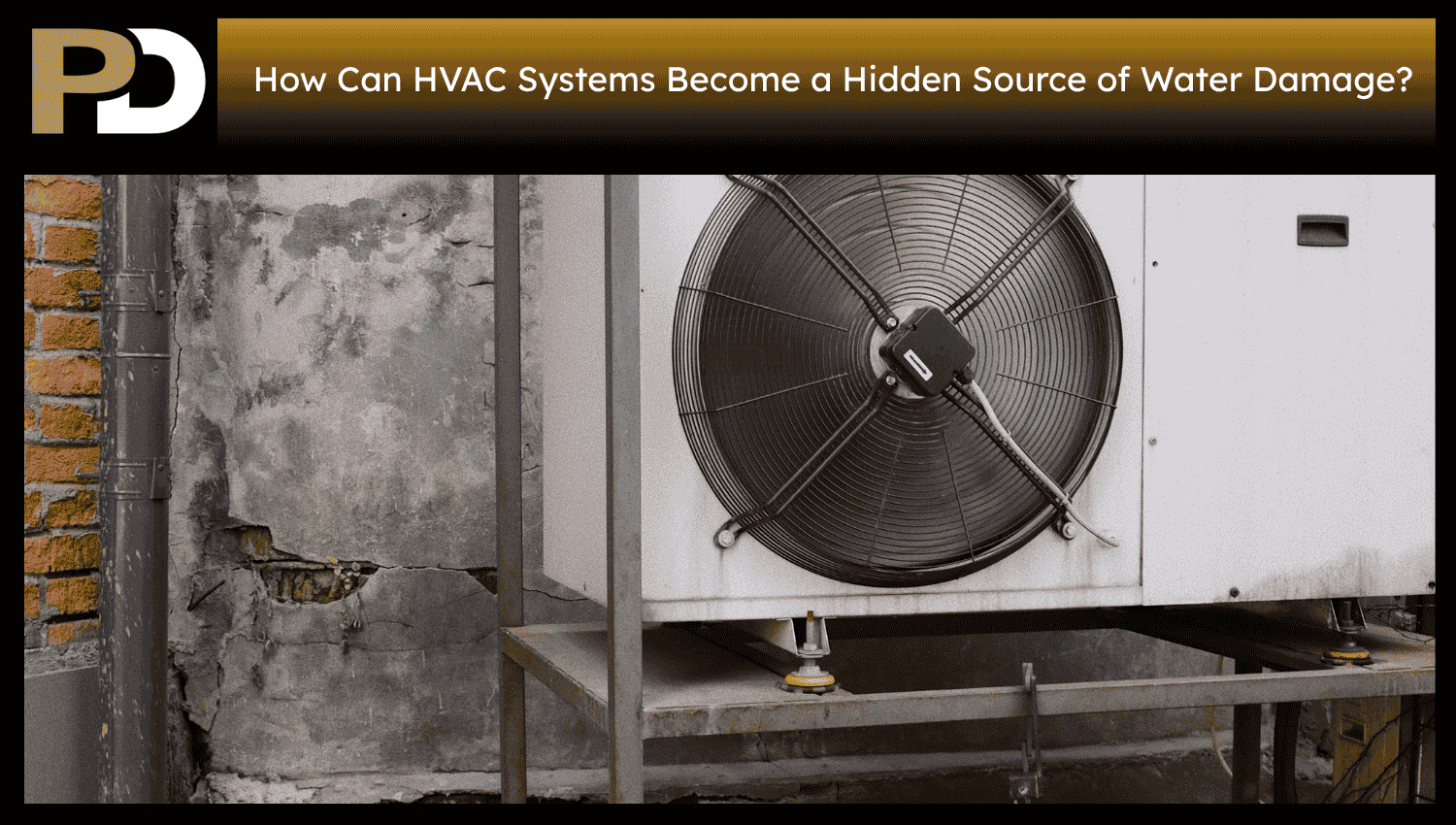
A heating, ventilating, and air conditioning system is used not only to heat and cool buildings but also to remove moisture from the air by condensation. Moisture seeps into surrounding components undetected if the heating system components responsible for collecting or draining moisture fail. HVAC systems are installed in a variety of places such as an attic, closet, basement, or utility room, making leaks difficult to detect until damage is noticed.
What Are the Early Warning Signs of HVAC Water Damage?
Here Are the 5 Early Warning Signs of HVAC Water Damage:
- Water Around HVAC Equipment: Water around an indoor HVAC unit represents an issue with the drainage system. Even the smallest puddles that form around air handlers or indoor air units indicate a blocked drain line, an overflowing drain pan, or other moisture-related problems.
- Ceiling or Wall Stains: The yellow, brown, or dark stains on the walls and ceilings beneath the HVAC equipment are a sign of a hidden water leak. Moisture migrates through framing cavities and ceiling cavities and appears on interior surfaces.
- Musty Odors Near Vents: Air vents or areas around HVAC units that still emit musty odors indicate moisture in the HVAC unit or in building materials. A lingering smell is a sign of continuing concealed moisture.
- Unusual Indoor Humidity Levels: An HVAC unit that suddenly turns on a room that’s damp or too humid means that it isn’t effectively dehumidifying the space. High humidity levels also indicate moisture that is trapped around system components.
- Reduced Cooling Performance: Certain water-related issues hamper cooling efficiency in HVAC systems. Heating System performance is compromised by limited airflow, frozen coils, or drainage problems, which also lead to a buildup of excess moisture.
Which HVAC Components Are Most Likely to Cause Water Damage?
Here are the 5 HVAC Components Most Likely to Cause Water Damage:
- Condensate Drain Lines: Condensate drain lines carry water generated during normal cooling processes. Dirt, algae, or debris that block the line cause backups and water overflow into nearby walls, ceilings, or floors.
- Drain Pans: Condensation is collected in drain pans before it leaves the system via the drain line. Pans that are cracked, rusted, or leaking allow water to penetrate adjacent building materials.
- Evaporator Coils: Damp, warm indoor air always condenses on evaporator coils when it blows over their cold surface. Limited drainage causes coils to freeze, and water then backs up and floods the property.
- Air Handlers: Various parts of air handlers create or control condensation. Water also seeps out into surrounding walls, ceilings, or floors due to an internal leak, clogged drainage, or damaged components.
- Humidifiers and Dehumidifiers: The use of a whole-house humidifier or dehumidifier draws off a lot of water. Moisture also seeps into nearby building materials due to improper installation, clogged drains, or equipment failures.
What Causes HVAC-Related Water Leaks?
Over time, HVAC systems leak water for several reasons. One of the most common causes is a clogged condensate drain line, which leads to a backup and water flowing out. Frozen evaporator coils also cause excessive water production as ice melts. The drain pans that are corroded or cracked no longer hold condensation, which seeps into the drain pan. Water does not flow properly due to incorrect drain line slopes or poor installation of drainage connections. These issues, when not addressed during routine inspections, escalate into major water damage before they’re noticed.
Where Does HVAC Water Damage Commonly Occur?
A common cause of HVAC water damage occurs in the immediate vicinity of indoor air-handling units, where condensation forms, such as in mechanical spaces, utility rooms, mechanical closets, and basements. Leaking water from attic-installed systems stains ceilings beneath the roof and drips down through structural cavities. The moisture seeps into adjacent walls, and before it is seen, it has wet the drywall and insulation. In areas around HVAC equipment, water leaking beneath the unit slowly damages the finished flooring and subfloors. Larger HVAC systems mounted in a mechanical room of a commercial building affect larger areas if a leak goes unnoticed.
What Hidden Damage Can Develop From HVAC Water Leaks?
HVAC leaks cause moisture to reach unseen places. Water also gets into wall cavities that are hard to find and trapped there, seeping in for a long time after the surfaces are dry. Occupied areas have damp spaces in the attic and at the ceiling around HVAC systems without warning signs, which impact structural materials. Water absorbed and held by the insulation decreases its performance and contributes to dampness. Moisture also causes drywall, wood framing, ceiling surfaces, and other building materials to deteriorate over time when exposed to it.
How Can Long-Term HVAC Water Damage Affect Property Value?
Water damage from HVAC systems that lasts for long periods decreases the property’s value and condition. Ceilings or interior finishes are damaged if water has been spotted on any surfaces; this is a setback during property viewings that discourages buyers. Continuing moisture issues also impact property evaluations and inspections. Water damage that is not visible in the walls, insulation, or structural materials is a concern for future maintenance expenses. The water intrusion has occurred before and is documented, and it can still affect the property’s resale value, as buyers are wary of the property’s overall condition.