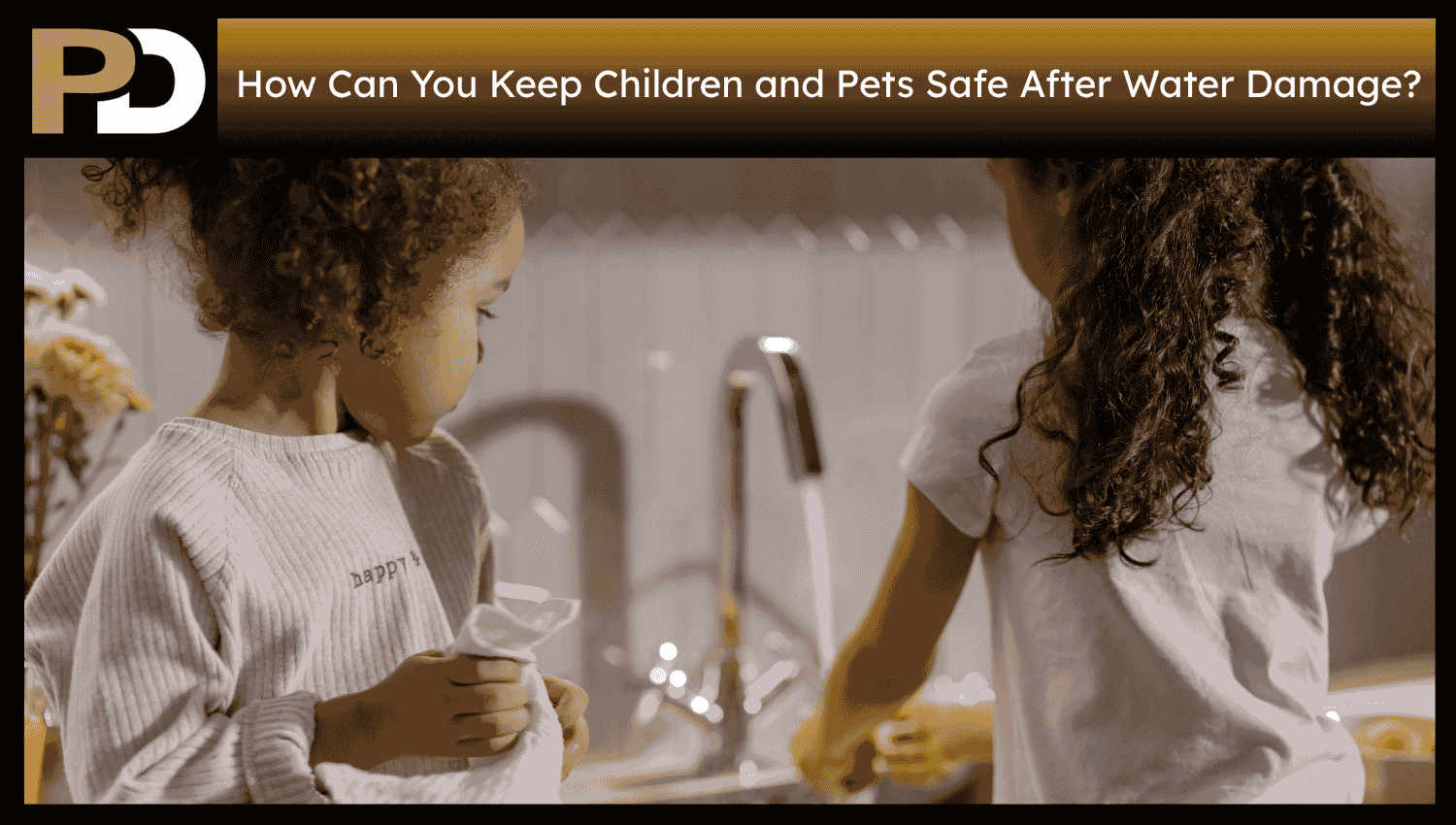
Water damage poses serious risks to children and pets because their natural behaviors and tendencies make them vulnerable. Children crawl and play on floors, and pets walk, lie, and eat on surfaces that become contaminated with water. Young children put things or their hands in their mouths without washing them first. Animals lick contaminated paws, fur, floor, or wet clothes, toys, and other items. Children breathe air and drink water at a higher relative rate per pound of body weight than adults, so that they are exposed to higher relative amounts of environmental contaminants. Children and animals have a limited ability to identify hazards because they may not know that standing water, damaged floors, and damaged wires are harmful. Children with asthma, allergies, or other respiratory diseases are especially susceptible to mold after flooding.
What Hazards Should Children and Pets Avoid After Water Damage?
Here are the 6 Hazards Children and Pets Should Avoid After Water Damage:
- Standing or Flood Water: Flooded areas can contain sewage, bacteria, chemicals, and sharp debris, so children should not play in them.
- Sewage-Contaminated Areas: Sewage that is exposed in a flood carries harmful microorganisms and contaminants that require careful cleaning.
- Wet Electrical Areas: Ensure that people do not stand near electrical outlets, appliances, cords, or broken wires in wet areas.
- Mold-Affected Materials: Don’t let children or pets into the area if you see mold or large amounts of damp material when cleaning up mold-affected materials.
- Unstable Flooring and Ceilings: Water softens floors, drywall, and ceilings, making them hazardous and prone to falling or collapsing.
- Cleanup Chemicals: EPA recommends that children (especially those with asthma) not be in rooms while strong cleaning and disinfecting chemicals are being used.
How Should You Restrict Access to Water-Damaged Areas?
Keep doors closed and use temporary barriers or baby gates, and prevent accidental opening. Move kids to a clean area of the property or another safe location if you must clean a lot. Keep pets out of contaminated rooms and prevent them from bringing moisture and dirt into clean rooms. Keep materials (wet items like drywall, insulation, carpet, and other removed debris) well away from homes and play areas. Avoid cross-contamination by moving shoes, clothing, tools, or building materials from contaminated areas to clean areas.
What Should You Do With Children’s Toys and Baby Items After Floodwater Exposure?
Here are 5 Should You Do With Children’s Toys and Baby Items After Floodwater Exposure:
- Discard Contaminated Soft Toys: The EPA advises throwing out soft and absorbent toys contaminated by floodwater, as they are very difficult to clean properly.
- Replace Flood-Exposed Bottles and Pacifiers: Do not Reuse Baby Bottles, nipples, or pacifiers that came into contact with floodwater or debris, and discard them.
- Clean Suitable Hard Toys: Some nonporous plastic toys can be cleaned and sanitized following suitable public health guidelines.
- Check Play Mats and Fabric Items: Porous mats and cushions, blankets, and other stuffed items absorb contaminated water and cannot be used again.
- Store Clean Items Away: Store toys and children’s items that have been properly cleaned away during the restoration process.
How Can You Protect Pets From Contaminated Water?
Do not allow animals to drink standing water, puddles, or other potentially contaminated water sources. Contaminants transfer easily to paws and fur and can be ingested when pets lick themselves. Clean your pet properly if it is exposed to floodwaters. CDC disaster guidelines indicate that, depending on the circumstances, your pet may need veterinary evaluation. Keep food and bowls clean, and use bottled drinking water from a source well away from the affected area. Contact a veterinarian immediately if a pet develops unusual symptoms after contact with contaminated standing water, as the water may contain infectious organisms such as Leptospira bacteria.
How Do You Know When the Home Is Safe for Children and Pets Again?
Your home is safe for children and pets when no standing water remains. Resolve any electrical or structural issues, including damaged wiring, weak floors, and ceilings, and dry or completely remove all wet materials. EPA advises drying water-damaged materials out quickly and discarding materials that cannot be effectively cleaned. Occupied areas should have no visible contamination, unresolved issues, or ongoing mold problems. EPA guidance recommends that no visible contamination, persistent musty odors, or unaddressed signs of water damage remain before normal occupancy resumes after restoration. In severe flooding, sewage exposure, structural damage, or extensive mold removal, contact an independent professional, mold specialist, or other expert to clear the area and verify the restoration job is finished.
How Do Professionals Make a Water-Damaged Home Safer for Families and Pets?
Here are the 8 ways professionals make a Water-Damaged Home Safer for Families and Pets:
- Hazard Assessment: Professionals correctly determine the water source, extent of contamination, materials involved, and safety risks.
- Water Extraction: Professionals quickly remove standing water to minimize further exposure and material damage.
- Containment: Professionals use physical barriers and negative air pressure to isolate affected areas from clean living areas.
- Removal of Contaminated Materials: Materials (that cannot be safely restored) are removed carefully and disposed of properly.
- Cleaning and Decontamination: Professionals clean and sanitize water-contaminated surfaces based on the type and extent of contamination.
- Structural Drying: Professionals dry water-affected building materials completely with industrial air movers and dehumidifiers.
- Mold Remediation: Professionals follow strict containment and remediation procedures if they find mold.
- Moisture Verification: Experts carefully check moisture content and determine whether all moisture objectives have been met.