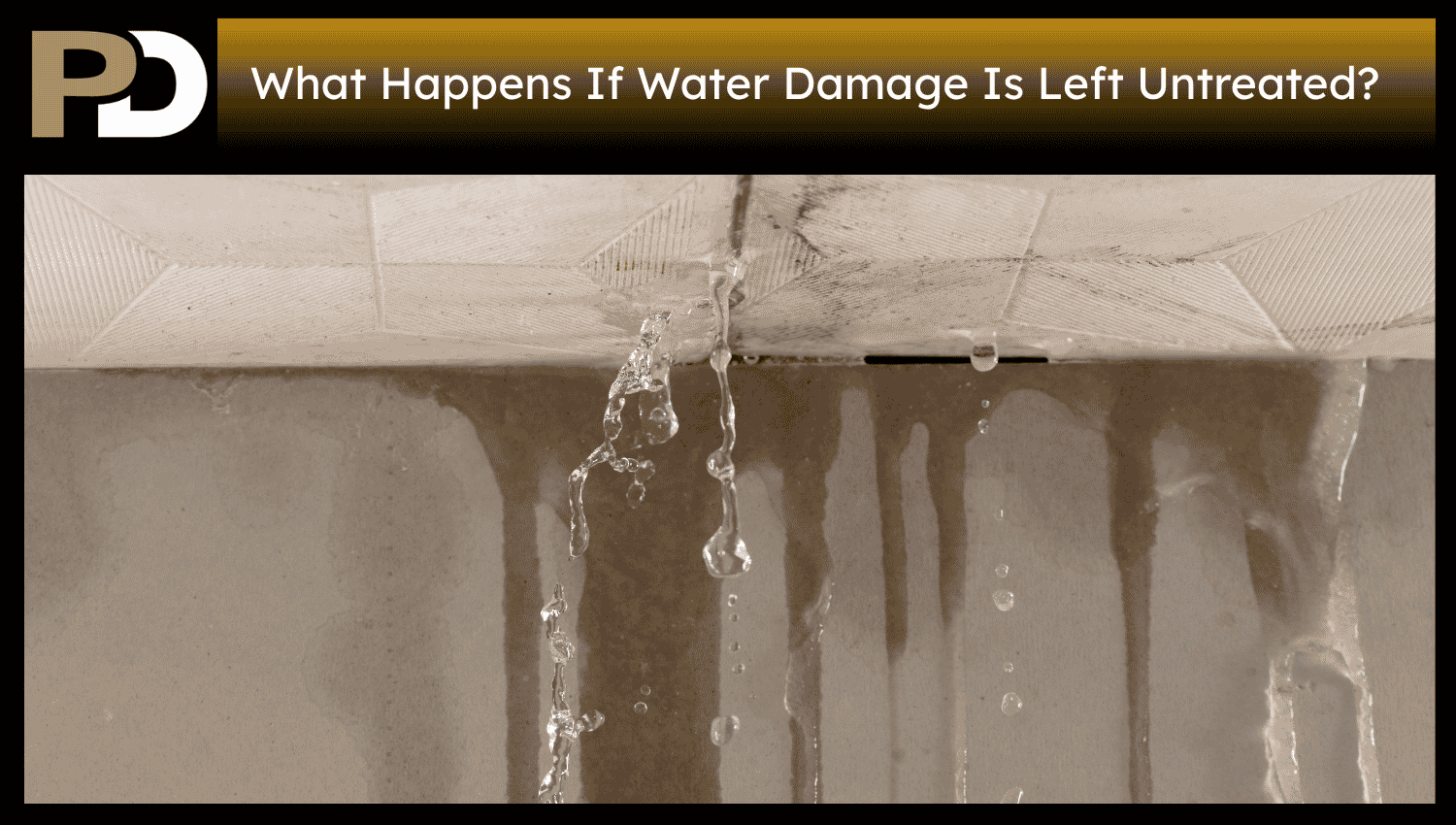
Water damage is not static and tends to worsen over time if left untreated. A leak, no matter how small, becomes a major issue as it spreads through building materials and structural components. Leaky water damage causes materials like drywall, wood, insulation, and flooring to become wetter over time. Water also spreads behind walls, under floors, in ceilings, and in framing systems. The ongoing water movement compromises the building’s integrity, reduces the durability of building materials, and adversely affects the interior environment, leading to greater overall deterioration of the property.
What Happens to Structural Components If Water Damage Is Ignored?
Here are the 6 ways damage happens to Structural Components if Water Damage is Ignored:
- Weakening of wooden framing: Wooden framing members soften, warp, and lose their load-bearing capacity over time when exposed to moisture, which compromises the structure’s overall stability.
- Drywall deterioration: The drywall becomes waterlogged, soft, and crumbly, pulling away from walls and ceilings as it deteriorates and loses strength.
- Subfloor damage: Water under the flooring causes soft or damaged subfloor materials and results in less durable, unstable, or uneven flooring.
- Ceiling sagging and collapse risk: Ceiling materials become soaked, sag, deform, and, in some cases, risk partial collapse when they are exposed to water for an extended period.
- Metal component corrosion: Nails, fasteners, and brackets rust and corrode over time in areas where they come into contact with water, reducing their strength and durability.
- Foundation stress: Structural cracking, shifting, or stress results from long-term moisture intrusion around a building’s foundation when water pools there.
How Does Untreated Water Damage Affect Building Materials?
As water continues to seep under the surface, flooring materials buckle, warp, swell, or separate. Moisture causes paint, wallpaper, and other wall finishes to peel, bubble, crack, and change color. Insulation becomes damp and loses its insulating properties, trapping moisture in building assemblies. Water stains cause permanent discoloration or progressive degradation, compromising structural integrity, durability, and appearance while water is still present.

What Are the Health Risks of Ignoring Water Damage?
Here are the 7 Health Risks of Ignoring Water Damage:
- Mold growth development: Mold proliferates and spreads throughout affected areas when moisture is present for an extended period, on walls, ceilings, carpets, and other building materials that are not easily visible.
- Respiratory issues: Exposure to humid environments and airborne particles from water-affected materials causes coughing, wheezing, and breathing discomfort, especially in sensitive people.
- Allergy flare-ups: Wet conditions worsen allergies and cause symptoms such as sneezing, watery eyes, nasal irritation, and skin discomfort.
- Poor indoor air quality: An abundance of moisture and microbial activity adversely affect indoor air quality, making it less comfortable and stale.
- Bacterial and microbial contamination: Water and wet materials allow bacteria and other microorganisms to grow, increasing the potential health risk to the property.
- Headaches and fatigue: Building indoor areas that are humid and poorly circulated leads to overall discomfort, headaches, and fatigue.
- Increased risk for vulnerable: Children, older people, and those with underlying health problems are sensitive to exposures in water-damaged environments and respond to the contaminants present in water.
What Happens to Electrical and Mechanical Systems?
Wires, electrical outlets, switches, and other parts are unreliable and dangerous when electrical systems are wet. Moisture, contaminants, or damp air spread to other areas of the building via the HVAC system. The longer water is in contact with it, the more electrical shorting, computer malfunctions, and failures are caused. Internal damage to components in household or commercial appliances causes them to lose functionality or fail.
How Does Untreated Water Damage Spread Through a Property?
Water damage spreads from room to room in a building through walls, floors, ceilings, and other interconnected building materials if left untreated. Water moves beyond the “damage zone” and sets up “traps” of unseen water pockets in wall cavities, subfloors, insulation, and other elements of the structure. More and more areas are affected, even if the initial water damage was limited to one area.
What Happens to Personal Belongings Over Time?
The personal property is damaged by prolonged exposure to water if not addressed. Moisture causes the wood to warp, crack, swell, or lose its shape. Upholstery materials, mattresses, and fabric-covered furniture and items absorb water and cause deterioration and odors. Electronic appliances and components break down due to corrosion, leading to malfunction or failure. Documents, books, photographs, and other paper-based items stain, warp, become illegible, or fall apart over time. Water is absorbed by the fabric, causing stains, odors, and damage to clothes, drapes, and other fabric products.
What Are the Financial Consequences of Untreated Water Damage?
Here are 7 Financial Consequences of Untreated Water Damage:
- Rising repair costs over time: Water damage continues spreading to other materials and building components, leading to costly repairs and problems.
- A wider area of restoration is needed: Damage to other rooms meant additional labor and materials were needed for the repairs.
- Replacement instead of repair: Water-damaged flooring, drywall, insulation, furniture, and other building materials must be replaced.
- Structural repair expenses: Moisture causes framing, subfloor, ceiling, and structural issues that, if left untreated for long periods, require costly rebuilding and repair.
- Increased utility bills: Leaky pipes and standing water lead to loss and waste, which, over time, result in higher water bills.
- Property value reduction: Water damage destroys property materials and decreases property value and marketability.
- Insurance complications: Water damage causes deterioration of property materials, degrading a property’s value and marketability, and resulting in insurance complications.

What Happens to Indoor Environments If Water Damage Is Not Addressed?
Water causes permanent damage and worsens interior conditions if left untreated. Indoor humidity creates an uncomfortable, less stable climate if not maintained. Wet conditions and exposure to air pollution reduce the livability or usability of a residence or workplace over time. The moisture on the walls, floor, and ceilings also affects the quality of life in the rooms, creating a less healthy and less comfortable environment.
What Are the Long-Term Risks of Leaving Water Damage Untreated?
Here are the 8 Long-Term Risks of Leaving Water Damage Untreated:
- Permanent structural deterioration: Over time, excessive moisture causes irreparable damage to structural components, including framing and load-bearing elements.
- Widespread mold infestation: The mould continues to grow and becomes more difficult and costly to eradicate with time if the water damage is left untreated.
- Irreversible material damage: Flooring, drywall, wood, and insulation were damaged beyond repair and have to be replaced.
- Hidden moisture problems: This stored water causes internal decay that is not immediately visible but affects the building’s structural integrity.
- Electrical and system hazards: Wiring, outlets, and HVAC systems are at risk of damage from excess moisture, lead to electrical problems and failure.
- Decline in indoor air quality: Humid air affects the freshness, comfort, and overall quality of a property’s indoor environment.
- Reduced property value: The home was left to water seepage, not re-sell for as much, and does not look as good as a home that did not have water seepage.
- Risk of partial structural failure: Water damage leads to sagging floors, ceiling collapses, or structural failures that pose safety hazards if left unaddressed.