The cabinets in a kitchen and bathroom are susceptible to water damage due to the presence of sinks, a dishwasher, a refrigerator and plumbing lines. Just a drip from the inside of a cabinet can cause structural materials (wood) to become saturated long before they show signs on the exterior of the cabinet. Moisture causes the doors to warp, cabinets to fall, compromises the integrity of the face frame, and leaks into subfloors or other walls. Knowing the impact of water on different types of cabinet materials, as well as the early warning signs and when to repair or replace cabinetry, is important to ensuring the structural integrity, beauty, and market value of your home.
Where Does Water Usually Enter Kitchen and Bathroom Cabinets?
Here are the 6 common water sources that damage cabinets:
- Sink Plumbing Leaks: Cabinet interior and base panel are the first to be damaged by a leak in the supply line, a lost drain P-trap, or a connection damaged in the disposal.
- Dishwasher Leaks: Leaks from dishwashers flood under base cabinets next to dishwashers and wet down toe kicks.
- Refrigerator Water Line Leaks: Ice makers or water dispensers have water lines that leak, and they go unnoticed as they run across the floor and go under base cabinetry.
- Countertop Water Intrusion: Water drips around sink edges or cracks in caulking or unsealed seams cause cabinet face frames and side panels to become soiled.
- Roof or Ceiling Leaks: Water leaking from upper roof damage or burst pipes damages upper wall cabinets from top to bottom.
- Flooding or Standing Water: Lower cabinet bases, side panels, and toe kicks are quickly soaked when there is standing water on the floor in a kitchen or bathroom.
What Are the Earliest Signs of Water Damage in Cabinets?
Here Are the 6 Earliest Signs of Water Damage in Cabinets:
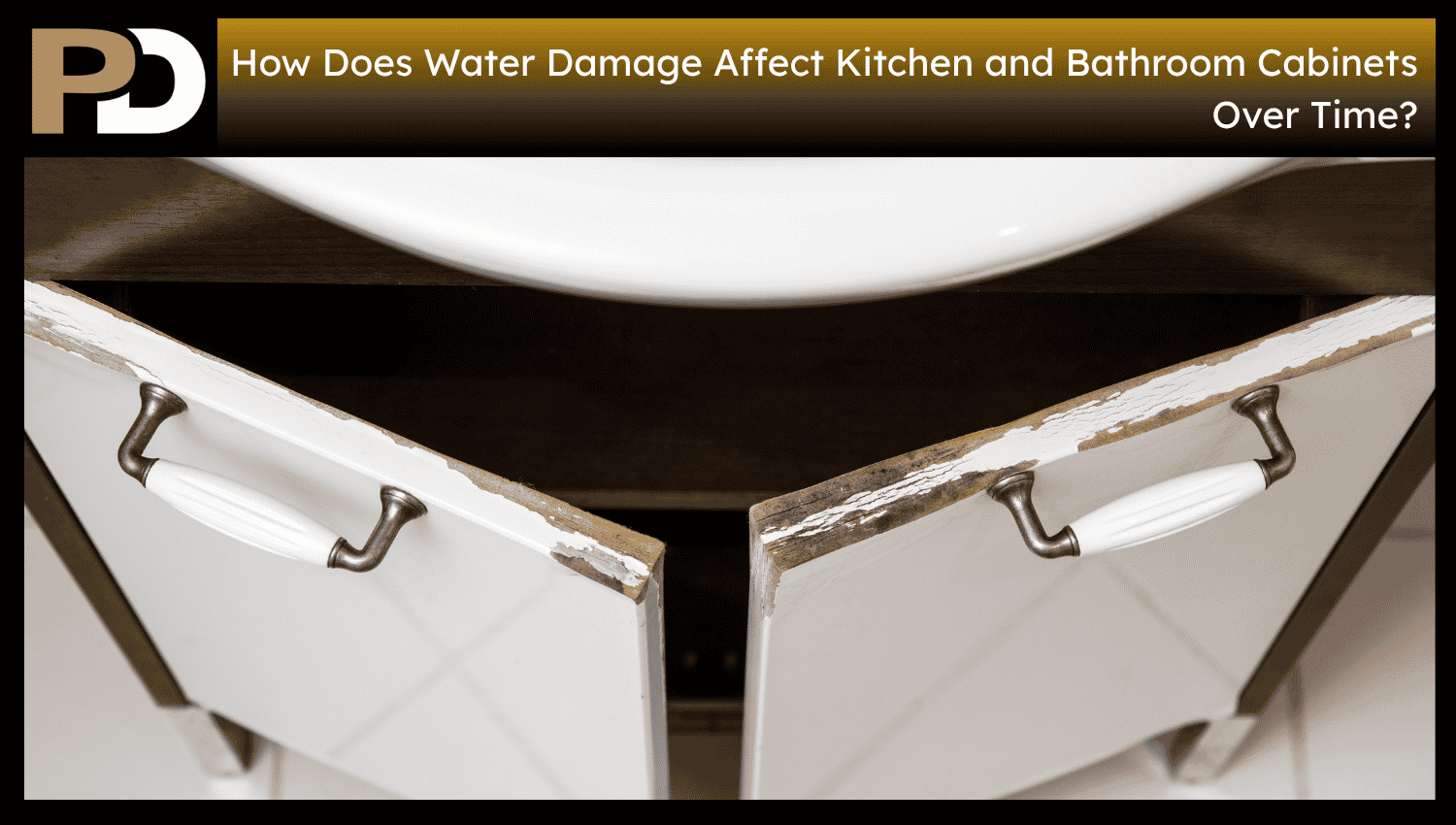
- Swollen Edges: Absorbed moisture causes the exposed edges of the panel, frame and seams of the doors to feel raised.
- Peeling or Bubbling Finishes: Laminate, veneer, paint or thermo-foil finishes that bubble or peel from the surface are caused by water seeping under the surface layers.
- Soft Interior Surfaces: Water damage causes loose bottom panels of cabinets, soft or spongy interior cabinet shelves, or depression of bottom panels and shelves.
- Doors That No Longer Close Properly: Cabinet doors and drawers don’t close because of door and frame warping caused by swelling from water.
- Musty Odours: Stuffy air within the cabinets, especially in dark spaces, develops a musty odour due to moisture.
- Discolouration: Interior panels or exterior side walls are stained with water, have dark discoloured areas or have yellow finishes.
How Does Water Affect Different Cabinet Materials?
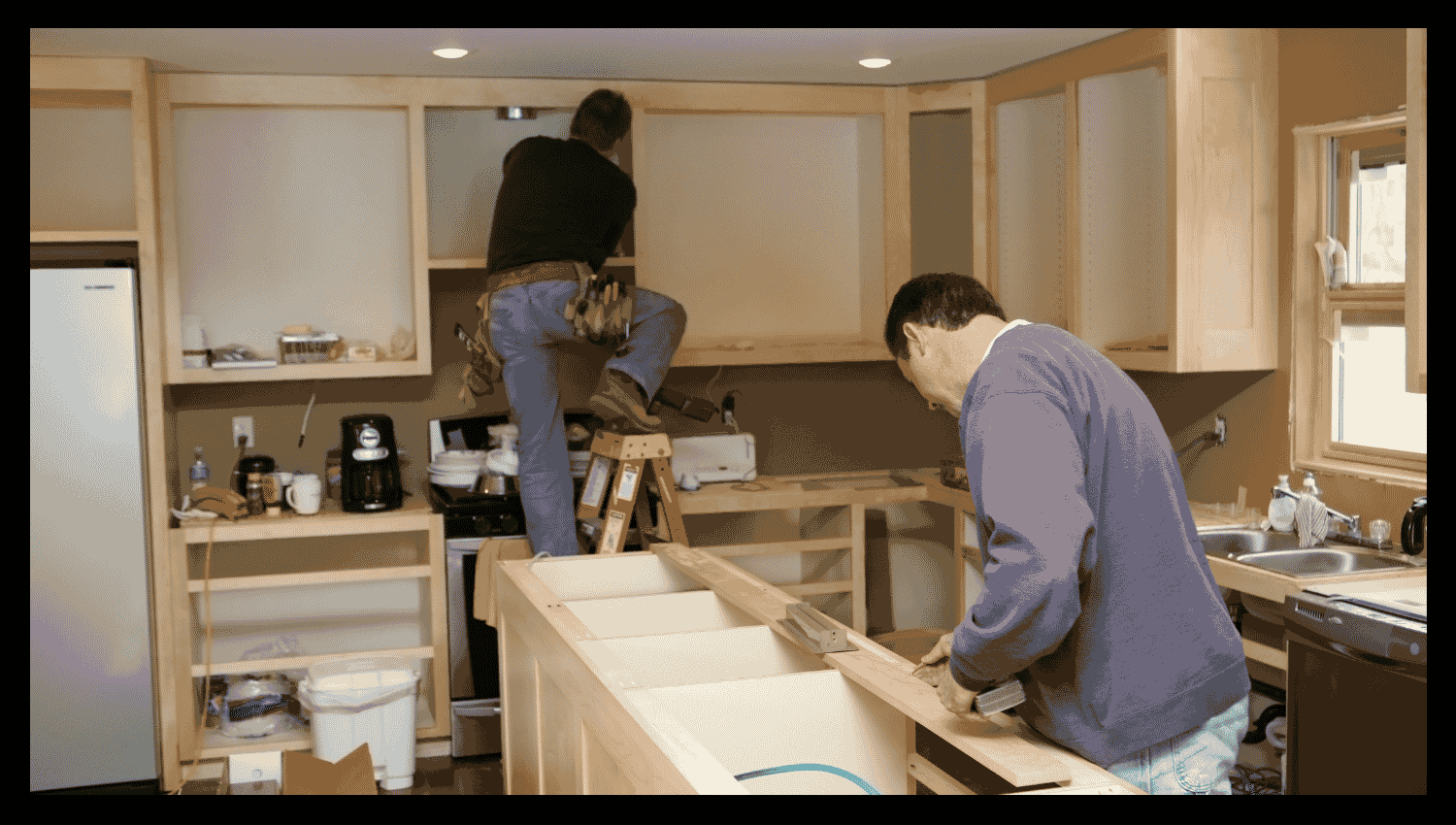
Solid wood cabinets expand and contract and warp along the grain, but can be sanded and refinished if they are dried quickly. Cross-laminated plywood cabinets are more moisture-resistant than other cabinet materials, but if a cabinet is exposed to moisture for an extended period, the plies delaminate. Exposed edges of particleboard cabinets absorb water quickly and, after absorbing it, swell to the point that they are irreparable. Medium-density fiberboard (MDF) is also vulnerable to cracking at the edges and corners, and structural damage due to swelling. Laminate or veneer finishes bubble, rise and peel away due to water breaking the bond of the adhesive that holds them together.
How Can Hidden Moisture Continue Damaging Cabinets?
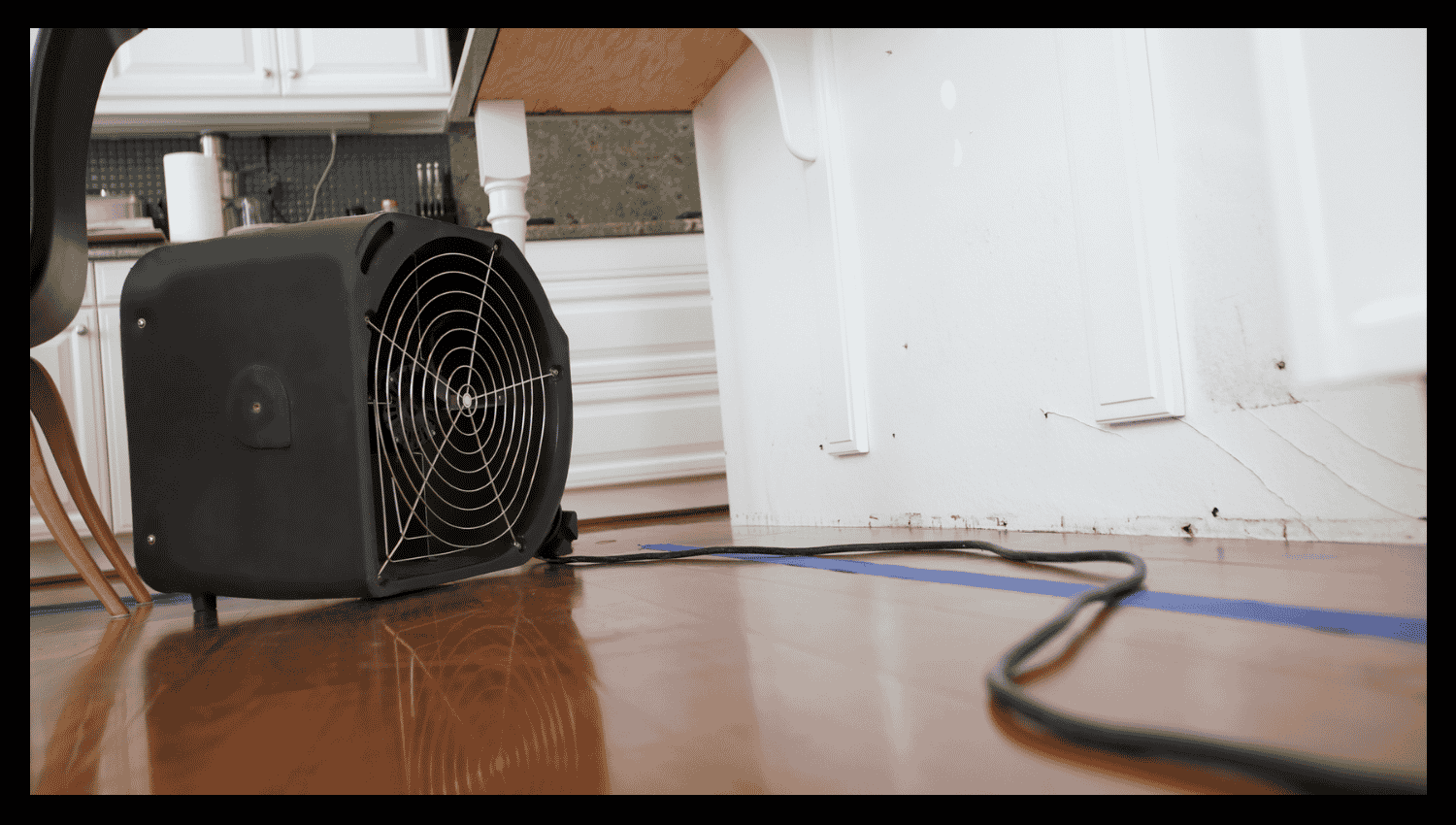
Moisture seeps into cabinets after the first leak and, if left undetected, causes additional damage. Moisture is trapped under cabinet bases and behind toes where there is minimal air circulation. The cabinet bottom is leaky, and water works its way into the wet wall surface behind the cabinets, causing wet wall cavities and wall framing saturation. Water embeds deep into the subfloor, which slowly undermines the structural floor frame underneath. Small leaks over a long period add up, and damage is cumulative due to lack of air circulation within enclosed cabinet boxes.
What Factors Determine Whether Cabinets Can Be Repaired?
Here are the 5 Factors That Determine Whether Cabinets Can Be Repaired:
- Cabinet Material: Solid wood and exterior plywood cabinets withstand drying and restoration better than particle board and MDF.
- Extent of Water Exposure: Any water that is damp and minor, on a single shelf, is easier to handle than water that is deep and wet throughout a cabinet run.
- Length of Time Wet: Cabinets that have been exposed to moisture for 24-48 hours are salvageable, and those exposed to moisture for a longer period of time have permanent structural damage.
- Condition of Structural Components: Damage to Structural Components (face frames, side panels or collapsed bases) greatly diminishes the possibility of repair.
- Water Source: Clean water that is leaking from the water supply pipe can be restored, but black water from sewage or heavily contaminated water needs to be replaced.
When Is Cabinet Replacement More Practical Than Repair?
Cabinet replacement is necessary when structural panels swell and become severely out of shape, and doors or drawers are unable to line up. Replacement is also required when the cabinet base, side panels, or face frames have been weakened and are not able to hold heavy stone countertops. Restoration is impossible if the material has been separated to the extent that large amounts of veneer are being removed from a tree and a crumbling particle board core. Cabinets that have been exposed to hidden leaks for long periods of time and those exposed to contaminated sewage water should be completely replaced to remove structural and biological hazards.
How Can Water-Damaged Cabinets Affect Property Value?
Damaged kitchen and bathroom cabinets drastically affect the appearance and value of these spaces and are a deal breaker for prospective home buyers. Potential home buyers or home inspectors tend to assume that there is a hidden plumbing leak, water intrusion issues, and subfloor rot when they observe bulging panels and peeling finishes. This can result in reduced offers, repairs needed, or delays in real estate transactions. Fix a repairable Small issue promptly so it does not affect your home’s structural integrity, your buyer’s trust, or its overall market value.