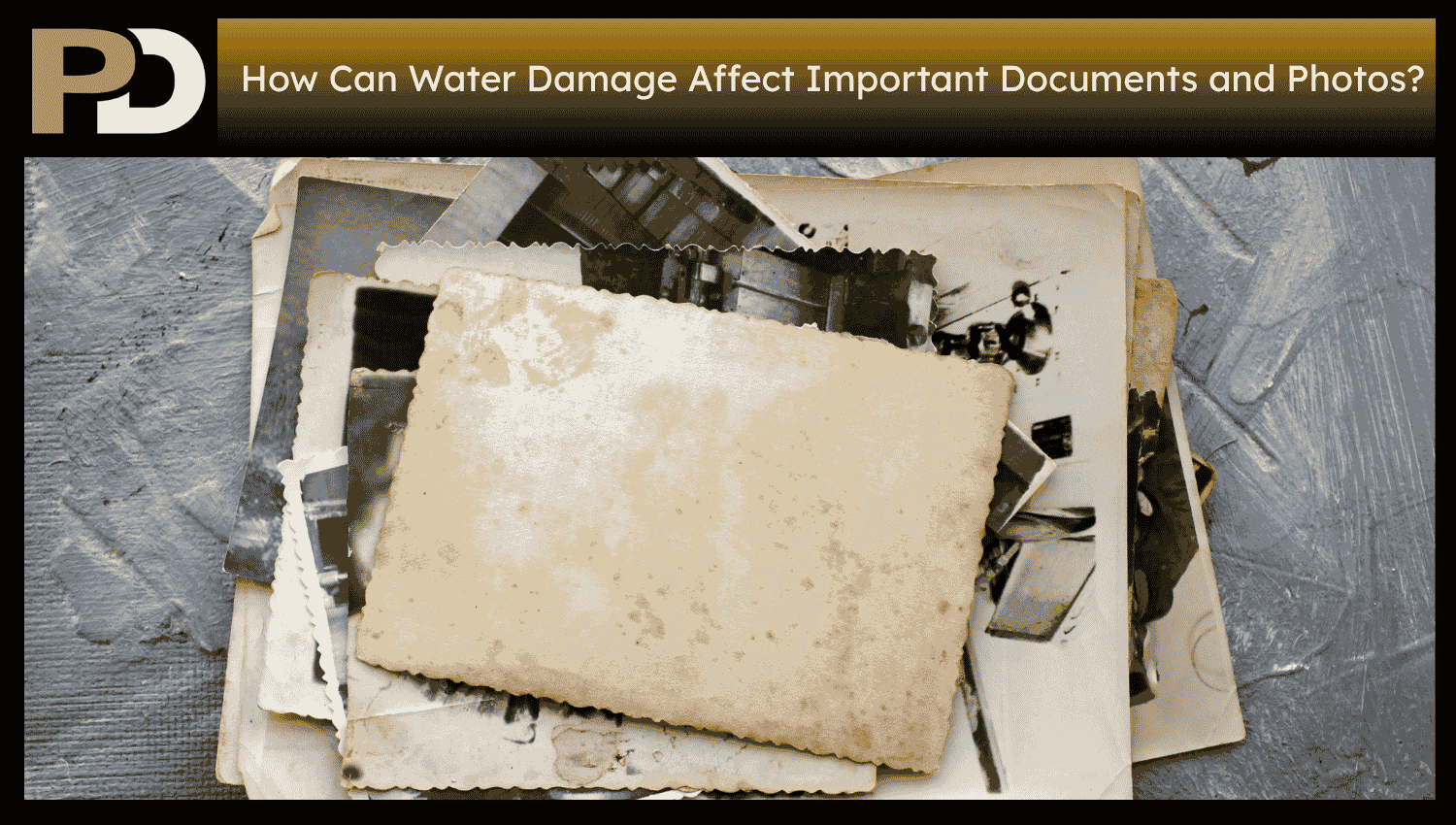
Paper fibers, inks, and photographic materials absorb water quickly, so keep these items dry. Even brief water exposure can cause severe staining, ink bleed, page sticking, and permanent loss of information. The amount of damage depends on the material, the water source, the duration of exposure, and how quickly you begin restoration. Understanding how moisture affects sensitive paper helps protect irreplaceable family memories and important personal papers.
What Valuable Items Are Most Vulnerable to Water Damage?
Wet conditions make legal documents, such as birth and death certificates, property deeds, and contracts illegible or invalid. Tax Files, Bank Statements, and financial records fade and are damaged by paper decay. Printed photos and family heirlooms are extremely sensitive and become stuck together forever, or fade and distort. Educational documents, business records, and bound books fall into disrepair and are replaced entirely if they become soaked.
What Are the Early Signs of Water Damage in Documents and Photos?
Here Are the 6 Early Signs of Water Damage in Documents and Photos:
- Wrinkled or Warped Paper: Paper fibers swell unevenly when they absorb moisture, causing a lot of curling or rippling to occur.
- Faded or Smudged Ink: Water dissolves printing pigments and pen ink, and important text runs, blurs, or washes away.
- Sticking Pages or Photos: Photographic emulsions and wet paper surfaces soften, stick together, and tear when separated.
- Discoloration: Yellowing of document surface, dark borders, or mineral rings caused by the evaporation of water.
- Musty Odors: Moisture causes musty odors in documents and photos.
- Visible Mold Growth: Dark spots, powdery spots, or fuzzy fungus growth occur rapidly on wet organic materials.
Which Factors Determine Whether Documents and Photos Can Be Saved?
Here are the 6 Factors Determine Whether Documents and Photos Can Be Saved:
- Type of Material: Materials range from glossy photo prints and coated paper to standard bond paper; each needs a different recovery method.
- Water Source: Tap water is safer, whereas sewage and floodwater contain biohazardous material.
- Length of Exposure: Dried or frozen items for less than 24 hours are much more likely to survive than those soaked for days.
- Extent of Water Absorption: Light surface dampness is easier to deal with than fully saturated collections.
- Speed of Drying: A good speed of drying stops further degradation and fiber collapse.
- Storage Conditions: A well-ventilated, cool recovery area stops active mold growth and prevents further material breakdown.
Can Water-Damaged Documents and Photos Be Restored?
Specialized drying and conservation techniques salvage water-damaged documents and photos. You can extract small amounts of moisture through careful, controlled air drying in a cool room. Professional document restorers use vacuum freeze-drying chambers for large-scale saturation and rare archives. During this process, moisture converts from ice to water vapor without putting the paper together into a book or any other form of binding. After stabilization, documents are digitally scanned to preserve the information, but unsalvageable official certificates are legally reissued.
What Should Homeowners Do Immediately After Documents Get Wet?
Carefully separate damp items using clean, unprinted paper towels to prevent moisture transfer between objects and page bonding. Always support documents from the bottom with flat boards when using wet paper, as they tear easily under their own weight. Avoid stacking wet papers or photos because it increases the weight on the pages, which speeds up page fusion and mould growth. Use low-speed oscillating fans to circulate cool, dry air around spread-out material and to help it dry. Lock any files that are irreplaceable before you contact a professional file restorer, and take photos of damaged files to aid insurance claims.
How Can Hidden Moisture Continue Damaging Documents After Drying?
Paper that feels dry to the touch can still contain moisture at the microscopic level in the cellulose fibers, which can lead to mold growth days later. Moisture triggers chemical changes that, over time, make paper brittle and discolored as sizing agents are lost. Moisture within the pages of bound books and file folders also keeps metal staples corroding and paper clips rusting. This gradual deterioration is why documents and materials continue to deteriorate and stain many years after they have been recovered.
How Can Homeowners Protect Important Documents and Photos From Water Damage?
Homeowners should keep important documents and passports in waterproof, fireproof security lockboxes. Store items on upper shelves or upper floors (not in basements) in storage bins, filing cabinets, and family photo albums. Scan hard copies and old photos to secure cloud storage, ensuring digital copies of your precious information last forever. Keep the relative humidity in the house under 50 percent with dehumidifiers, and do not store paper records under plumbing, water heaters, or roof valleys.