Water damage is not always apparent, as water seeps behind walls, under floors, into ceilings, and around structural elements without immediate symptoms. It takes weeks or even months to detect small plumbing leaks, roof leaks, and condensation issues. During this time, moisture continues to flow through building materials and slowly affects more of the property. One of the most useful tools to find such hidden moisture issues is thermal imaging. It is based on infrared technology that identifies temperature differentials between surfaces, which is used to detect the presence of moisture. Thermal cameras do not directly detect water. These cameras identify regions of the climate that have temperature variations from normal that are of interest. Restoration professionals then resort to a moisture meter to determine whether moisture is present.
How Does Thermal Imaging Help Locate Hidden Water Damage?
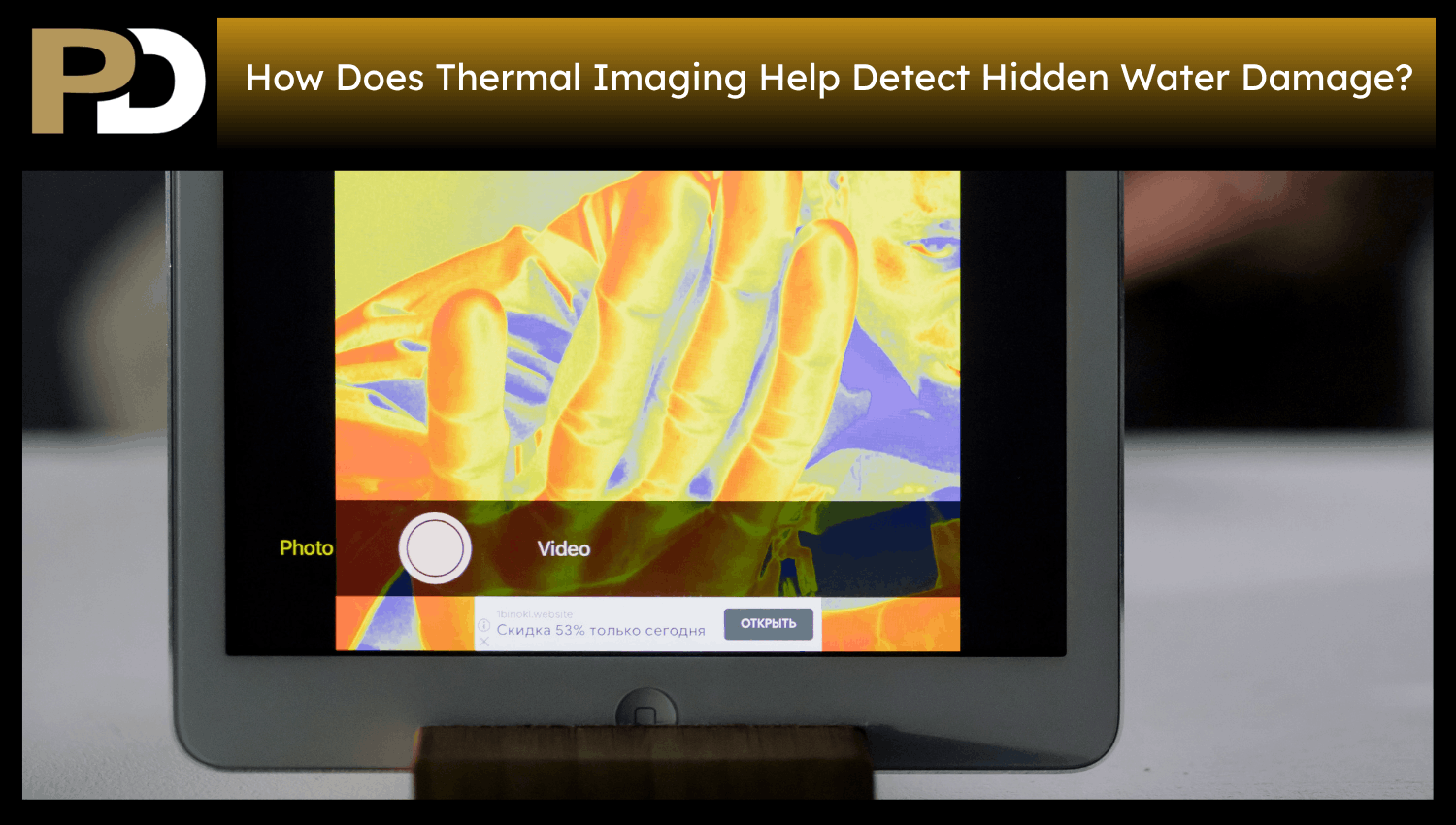
Thermal imaging is used to find water leakage by discovering temperature variations in building materials such as walls, ceilings, and floors. Moisture absorbs and releases heat differently than dry materials. These differences cause wet materials to be at a different temperature than dry materials. These temperature differences are seen on the thermal camera as a color change that indicates potential moisture.
Thermal imaging is also used to pick up moisture patterns. The camera does not actually show water, but reveals what areas of the finished surface allow water to spread behind. This enables the inspector to determine whether a leak is present without the need to rip out drywall or flooring.
Walls, ceilings, and floors are scanned to find suspicious areas quickly and before the need for expensive and invasive inspection. After these locations are identified, moisture meters are used to determine whether moisture areas are present.
What Types of Water Damage Can Thermal Imaging Help Identify?
Here are 5 Types of Water Damage That Thermal Imaging Can Help Identify:
- Hidden Plumbing Leaks: Small plumbing leaks go undetected until they are visible as damage in the wall, ceiling, or under the sink. Thermal Imaging is useful for detecting abnormal heat signatures that result from leaking water on the other side of complete surfaces.
- Roof Leak Intrusion: Damage to roofing materials allows rainwater to seep into the attic areas, ceilings, and wall cavities before stains are noticed. Thermal imaging is used to identify potential moisture problems related to roofs.
- HVAC-Related Moisture Problems: Condensation occurs in the normal operation of heating and cooling systems. Hidden moisture goes undetected when drain lines become blocked, drain pans overflow, or condensation occurs around HVAC equipment. Thermal imaging is used to detect such moisture areas before they are visible.
- Flood and Storm Damage: Water moving in due to flooding or stormwater can extend beyond a water-damaged area. Thermal imaging is a useful tool for inspectors to determine the moisture content of walls, flooring, ceilings, and other structural materials following major water events.
- Foundation Moisture Issues: Water coming in from foundation walls or floor slabs can result in hidden moisture in basements and crawl spaces. Thermal imaging is used to find cooler areas, which points to moisture building up on foundation surfaces.
Where Is Thermal Imaging Commonly Used During Water Damage Inspections?
Thermal imaging is a widely used tool employed in various situations during water damage inspections. Thermal imaging is carried out in all residential and commercial buildings, where there is a potential for hidden moisture. One of the most frequently inspected spaces is walls, as plumbing leaks and outside water intrusion are likely to occur within wall spaces. Thermal cameras are used to detect abnormal heat readings behind drywall and finished surfaces.
Ceilings are scanned following roof leaks or plumbing problems from upper floors. Thermal imaging is also used to find moisture before stains in the ceiling or sagging occur. Floors are also checked as water goes under hardwood, laminate, tile, or vinyl floors and is not noticed on the surface. The attic space is frequently checked after storms, as roofing materials are damaged and water gets into the roof framing and insulation. Foundation moisture and groundwater intrusion are checked in basements and crawl spaces.
What Factors Can Affect Thermal Imaging Results?
Here are 6 Factors That Can Affect Thermal Imaging Results:
- Indoor Temperature Conditions: Thermal images are affected by temperature differences between the room and the building materials. The best inspection results are achieved with stable indoor temperatures.
- Air Movement: Heating systems, air conditioners, fans, and ventilation alter surface temperatures. Moisture patterns change with air motion, which affects how moisture appears during thermal imaging.
- Surface Materials: The thermal response of materials varies depending on the type of construction materials used. Inspectors take into account the various thermal patterns that drywall, wood, concrete, tile, and metal create.
- Sunlight Exposure: Exposure to direct sunlight causes temperature differences in walls, roofs, and windows, and these differences are not necessarily due to moisture. These conditions are checked before interpreting the thermal images.
- Moisture Depth: Sometimes moisture within walls or structural material does not cause a temperature difference on the wall surface. More tests are necessary for confirmation.
- Insulation Levels: Heat movement in walls and ceilings is influenced by insulation. Thermal cameras sense a temperature difference through thick insulation, which lessens or alters the temperature difference.
How Does Thermal Imaging Work Alongside Moisture Meters?
Thermal imaging and moisture meters complement each other, as they serve different purposes. Thermal cameras can detect what looks like an abnormal heat pattern, which can reveal the presence of moisture; Moisture meters can measure the moisture content of materials in a building.
Most inspections start with a thermal scan, which is used to identify potential areas of moisture. Once these areas have been identified and there is some suspicion that moisture is present, moisture meters are used to determine whether moisture has built up in the area. These are then read and compared to a reading from the dry side to know how far the water has penetrated.
Both of the tools are used in tandem during the restoration. Thermal imaging can be used to monitor temperature changes, and moisture meters are used to ensure affected materials are drying out correctly. Both methods are found to give better inspection results than using either method alone.